
Why Food Tracking Still Sucks in 2025 (And How AI Fixes It)
Why Food Tracking Still Sucks in 2025 (And How AI Fixes It)
You know you should track what you eat. Whether you're trying to lose weight, build muscle, manage a health condition, or just understand your nutrition better, food logging is the gold standard. Every nutritionist, trainer, and doctor will tell you the same thing: track your intake.
But here's the truth nobody wants to admit: traditional food tracking is exhausting.
You pull out your phone. You search for "grilled chicken breast." You scroll through seventeen different entries with wildly different calorie counts. You guess the portion size. You log each ingredient in your salad separately. You spend three minutes trying to find the right barcode scanner angle. You give up and pick something that's "close enough."
By day four, you've stopped logging dinner. By day seven, you've abandoned the app entirely.
You're not lazy. The tools are broken.
The Problem: Legacy Apps Make You Do All the Work
Let's be clear about what's wrong with the incumbents.
MyFitnessPal: Built for 2008, Not 2025
MyFitnessPal has 200 million users and a database of 14 million foods. Impressive—until you realize that massive database is also the problem. User-generated entries are riddled with errors, duplicates, and inconsistencies. The "apple" you logged might have 50 calories or 150 calories depending on which crowd-sourced entry you picked.
The core experience hasn't fundamentally changed in over a decade. You're still:
- Manually searching for foods
- Scanning barcodes one at a time
- Estimating portion sizes by eye
- Logging each ingredient separately for home-cooked meals
- Spending 10–15 minutes per day on data entry
MyFitnessPal added a photo feature years ago, but it's essentially just a visual diary—the photo doesn't actually do anything. You still have to manually log everything.
Cronometer: More Accurate, Still Manual
Cronometer appeals to the detail-oriented crowd. Its database is curated, not crowd-sourced, which means better accuracy. It tracks micronutrients that MyFitnessPal ignores. For people managing specific health conditions or optimizing athletic performance, it's a step up.
But Cronometer doesn't solve the fundamental friction: you're still doing manual data entry. In fact, because Cronometer's database is smaller and more curated, you often can't find what you're looking for at all. Ate at a local restaurant? Cooked a family recipe? Good luck.
The accuracy is better, but the time investment is the same or worse.
The Real Cost: Compliance Collapse
Here's what the research shows (and what you've probably experienced): adherence to food logging drops off dramatically after the first week. The reason isn't motivation—it's cognitive load.
Every meal becomes a chore. Every snack requires an app transaction. The juice isn't worth the squeeze, so people quit. And when they quit tracking, they lose the insights, accountability, and behavior change that made tracking valuable in the first place.
The problem isn't you. It's that these tools were built in an era before AI could do the heavy lifting.
The Why: Manual Logging Is a Pre-AI Design Pattern
MyFitnessPal launched in 2005. Cronometer in 2011. Both were built around the same assumption: the user must manually structure and input their data, and the app will store and analyze it.
That made sense twenty years ago. But we're living in a different technological era now.
Frontier AI models can:
- Recognize complex visual scenes
- Identify multiple foods in a single image
- Estimate portion sizes from photos
- Understand context and cooking methods
- Extract structured nutrition data from unstructured inputs
Yet most nutrition apps are still designed around 2008-era manual workflows. They've bolted on minor features (a barcode scanner here, a recipe importer there), but the core interaction model is unchanged.
This is what happens when incumbents optimize existing products instead of rebuilding from first principles around new technology.
The Fix: Mealyze Is AI-Native Nutrition Tracking
Mealyze was built from the ground up around a single principle: the AI should do the work, not you.
Here's how it actually works:
1. Snap a Photo, Get Instant Analysis
You take a photo of your meal. That's it.
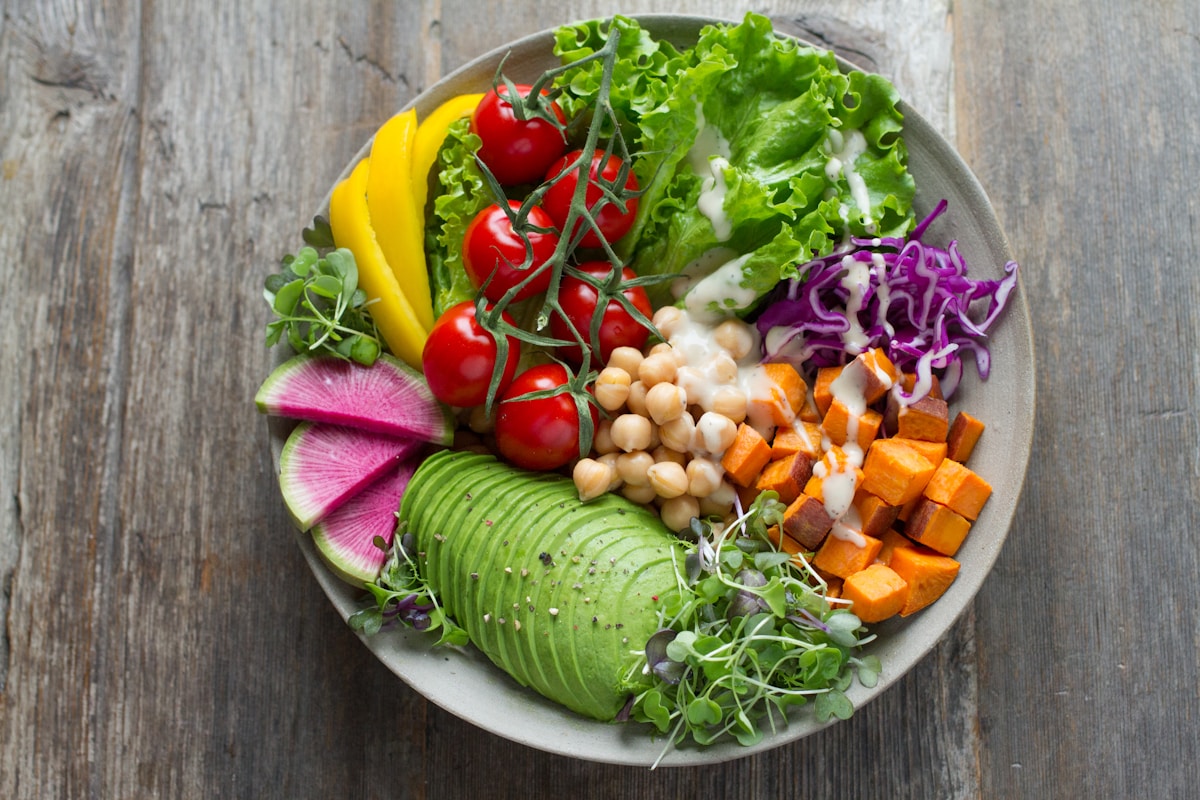
Mealyze's computer vision models—trained on millions of food images—identify what's on your plate, estimate portion sizes, and calculate complete nutrition data in seconds. Grilled salmon with roasted vegetables and quinoa? One photo. Done.
No searching. No barcode scanning. No manual ingredient entry.
2. Handles Real-World Complexity
Most "AI" food apps fall apart the moment you eat something that's not a packaged product or a simple single-food item. Mealyze handles:
- Multi-food meals: A bowl with six different ingredients gets recognized and logged as six separate items
- Home-cooked dishes: The AI understands cooking methods, combinations, and typical recipes
- Restaurant meals: Even when there's no nutrition label, Mealyze estimates based on visual analysis and contextual knowledge
- Partial plates: Ate half your burger? The AI adjusts portions accordingly
This is the difference between narrow pattern-matching and genuine AI reasoning.
3. You Stay in Control
AI-native doesn't mean black-box. Every Mealyze analysis is transparent and editable. If the AI identified your grain as quinoa but it was actually farro, you can correct it in one tap. The system learns from your corrections and gets smarter over time.
You're not choosing between accuracy and convenience. You get both.
4. Built for Consistency, Not Perfection
Here's a secret professional nutritionists know: consistency matters more than precision.
A food log that's 85% accurate but maintained every day for three months delivers infinitely more value than a 99% accurate log you abandon after one week.
Mealyze is designed for long-term adherence. By eliminating friction, it keeps you logging. And when you log consistently, you gain the insights and accountability that actually drive behavior change.
Mealyze vs. the Incumbents: What's Different?
| Feature | MyFitnessPal | Cronometer | Mealyze | |---------|--------------|------------|----------| | Core input method | Manual search + barcode | Manual search + barcode | Photo | | Time per meal | 3–5 minutes | 3–5 minutes | <30 seconds | | Multi-food meals | Log each separately | Log each separately | Single photo | | Home-cooked meals | Estimate or recipe builder | Estimate or recipe builder | AI recognizes | | Learning curve | Moderate | Steep | Minimal | | Adherence driver | Discipline | Discipline | Effortlessness |
The difference isn't incremental. It's architectural.
The Bottom Line
Nutrition tracking shouldn't feel like a part-time job. The insights are too valuable, and the health outcomes are too important, to be locked behind tedious manual workflows.
MyFitnessPal and Cronometer served their era well. But we're not living in that era anymore. Frontier AI has fundamentally changed what's possible—and what users should expect.
Mealyze is what nutrition tracking looks like when you build it from scratch in 2025: AI-native, effortless, and designed for real humans who have better things to do than spend 15 minutes logging lunch.
Try Mealyze Free
Ready to stop fighting your food tracker? Experience AI-native nutrition logging at https://mealyze.com.
Snap. Track. Done.